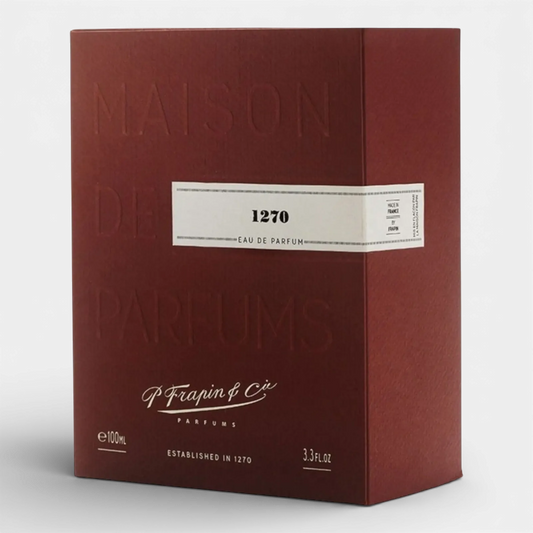
Your Perfume Didn't Disappear. Your Brain Just Stopped Caring.
Key Takeaways
- Nose blindness is a biological process, not a sign that your perfume has poor longevity. The fragrance is still there even when you cannot smell it.
- Olfactory adaptation usually kicks in 15 to 30 minutes after continuous exposure to the same scent.
- Nose blindness only affects you. Everyone around you can still smell your perfume clearly.
- Rotating between fragrance families is the most effective way to manage nose blindness and keep your perception fresh.
- If you want to accurately judge how long a perfume lasts, ask someone else or step away and come back to it.
You spray your perfume in the morning. It smells incredible. An hour later you can barely detect it. By lunch it feels completely gone. Except it is not. Ask anyone near you and they will tell you they can still smell it just fine. The perfume is still there, projecting normally. Your brain just decided to ignore it.
This is nose blindness, and it tricks people into thinking their perfume has terrible longevity when the real problem is biology.
What Is Actually Happening
Nose blindness, or olfactory adaptation, is when your olfactory system becomes less responsive to a scent after continuous exposure. It usually kicks in 15 to 30 minutes after you smell the same fragrance. Your brain is designed to filter out constant, familiar smells so it can stay alert to new or potentially important ones like smoke, spoiled food or changes in your environment. From a survival perspective this filtering is useful. In perfumery it is incredibly annoying.
The important thing to understand is that nose blindness only affects you. Everyone around you can still smell your perfume clearly, even when you cannot detect it at all.
Why It Feels Like Your Perfume Vanished
Your nose contains hundreds of different olfactory receptors, each tuned to specific types of molecules. When you wear a fragrance, the same receptors get stimulated repeatedly. Over time your brain reduces its response to that constant signal. The perfume has not stopped projecting. It has not evaporated. Your brain has categorised it as background information and moved on.
This is why you might suddenly notice your fragrance again hours later, or catch it unexpectedly when you move or step into fresh air. The scent was there the whole time. Your brain just was not paying attention to it.
Why People Overapply
Nose blindness is the reason so many people wear too much perfume. They spray in the morning, go nose blind within 30 minutes, assume the fragrance has disappeared and spray again. By the end of the day they have reapplied three times and everyone around them is overwhelmed. Meanwhile they still cannot smell it on themselves. Understanding this can save you from becoming that person in the room.
Why Switching Fragrances Works
Different fragrance families activate different combinations of olfactory receptors. Florals stimulate a different receptor pattern than woods. Citruses engage lighter, more volatile receptors. Resins, musks and ambers activate heavier pathways. When one group of receptors becomes desensitised through constant exposure, introducing a different scent profile re-engages another set. This is why switching between scent families can feel refreshing and make fragrance more perceptible again.
It is also why wearing the same fragrance every single day makes nose blindness faster and more complete. Your brain learns to tune it out entirely.
How to Work With It
You cannot eliminate nose blindness but you can manage it. Rotating your fragrances regularly between florals, woods, citruses and orientals prevents overloading one receptor group. Even alternating between two or three scents makes a noticeable difference.
Apply strategically. Putting perfume on clothing, hair or the back of your neck rather than just pulse points means fabric holds scent longer without the influence of skin chemistry. Use unscented skincare where possible, as fragranced moisturisers introduce competing scent molecules that can dull your perception of what you are actually wearing. Step outside into fresh air periodically to give your olfactory system a chance to reset. Even a few minutes can restore clarity.
What This Means for Judging Longevity
Nose blindness makes it nearly impossible to accurately judge how long your own perfume lasts. You will go nose blind long before the fragrance actually fades, which is why online longevity reviews can be unreliable. Someone might write that a perfume only lasts two hours when really they went nose blind after two hours and the scent kept going strong for everyone else in the room.
If you want to know how long a perfume really lasts, ask someone near you. Or step away for a while and come back to it. Do not trust your own nose after the first hour.
Your Perfume Did Not Disappear
Nose blindness is not a flaw in your perfume and it is not a failure of your sense of smell. It is a built in biological mechanism designed to keep your brain from being overwhelmed by constant sensory input. Once you understand it you can work with it. You will stop panicking when you cannot smell your perfume anymore, stop overapplying, and make better decisions about how and what you wear.
If you want help building a rotation that keeps things interesting and your nose genuinely engaged,